


Neurofeedback Diagnostics Is it For You?

Understanding What Cannot Always Be Seen
A traumatic brain injury (TBI) can change a person's life in ways that are not immediately visible. Memory difficulties, emotional changes, reduced concentration, fatigue, and cognitive challenges may persist long after the initial injury.
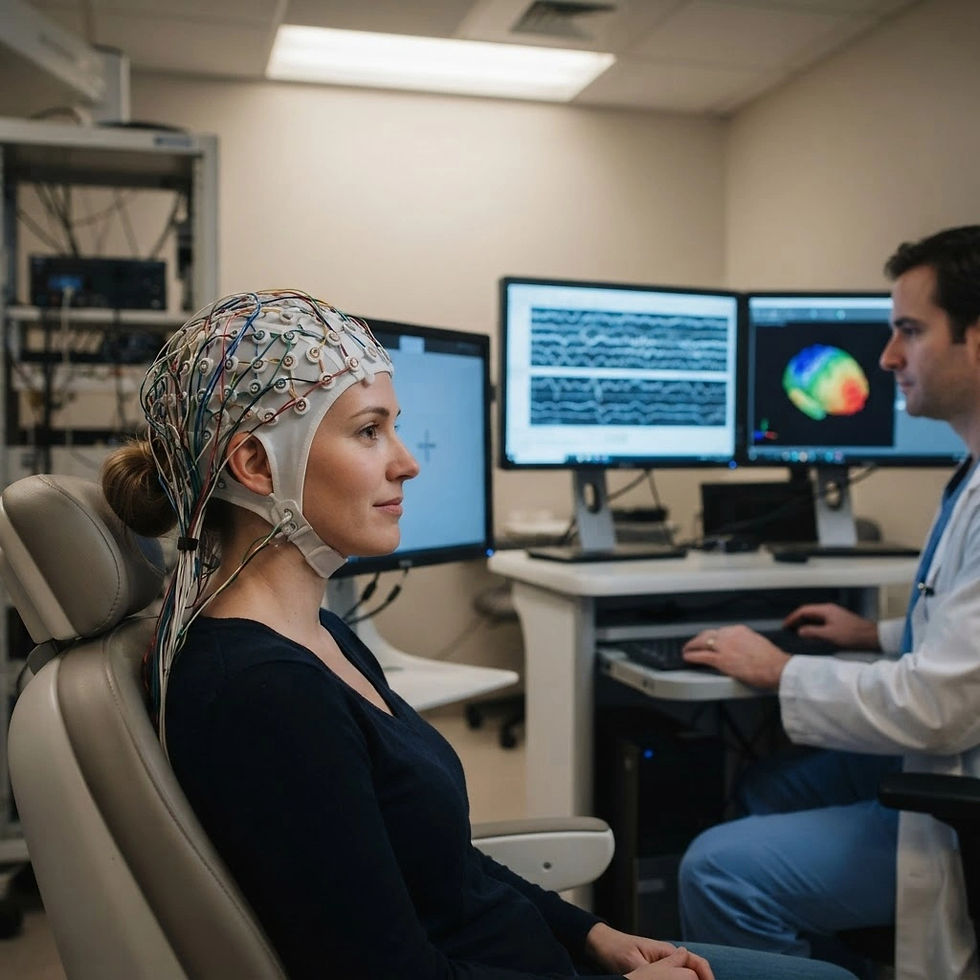
For individuals experiencing these symptoms, understanding how the brain is functioning can be an important part of the evaluation process.
How Can Brain Mapping Benefit a TBI Patient?
Brain mapping, commonly performed using rsfMRI and qEEG measures and analyzes patterns of electrical activity in the brain.
Although brain mapping cannot independently diagnose a traumatic brain injury, it may provide qualified clinicians with additional information when considered alongside medical history, neurological examinations, imaging, and cognitive testing.
Potential benefits include:
Additional Clinical Insight: Provides information about brainwave patterns that may warrant further clinical consideration.
A Broader Evaluation: Offers another source of information when assessing neurological and cognitive concerns.
Individualized Care: May contribute to clinical discussions about appropriate treatment or rehabilitation options.
Supporting Documentation: Provides findings that can become part of a patient's broader medical record.
Why This Matters to Families and Attorneys
Following a traumatic brain injury, family members are often the first to notice changes in personality, memory, behavior, or everyday functioning.
These changes can be difficult to communicate, particularly when conventional imaging does not fully explain the symptoms being reported.
A comprehensive neurological evaluation may help families better understand the patient's difficulties while providing treating professionals with additional clinical information.
In personal injury cases, appropriately interpreted brain mapping results may also form part of the medical documentation reviewed by attorneys and qualified medical experts.
However, brain mapping should never be presented as standalone proof of an injury, its severity, or its cause. Its clinical and legal relevance depends on the individual circumstances, the quality of the assessment, and interpretation within the complete medical record.
A More Complete Picture of Brain Health
The greatest value of brain mapping is not simply producing an image of brain activity. It is the possibility of contributing additional information to a comprehensive evaluation of an individual experiencing neurological difficulties.
For TBI patients and their families, pursuing appropriate diagnostic assessments can be an important step toward understanding symptoms, discussing rehabilitation options, and making informed decisions about future care.
At TBI Center NY, we help coordinate access to independent diagnostic professionals and contracted facilities, supporting practitioners, patients, and attorneys seeking appropriate neurological evaluations.
Brain mapping is an adjunctive assessment tool. Its clinical utility varies, and qEEG is not established as a standalone diagnostic test for TBI. All findings require interpretation by appropriately qualified medical professionals.

Comments